Showing posts with label Rocket Science. Show all posts

Thursday, February 11, 2021

Tracker220 is going to the Moon!


You read that right. Tracker220 is going to the moon! My book was selected to be part of the Writers on the Moon project headed up by author and Rocket Scientist Susan Kaye Quinn. Tracker220 is part of a 125 other independent author's content that will be loaded onto a SD card and included in the payload of an Astrobotics lunar lander. The mission is set to launch in July 2021 and will become a time capsule that will remain on the moon to be found at a later date.

And for fun, I also included my two short stories Arch Nemesis and Pyramid Scheme and associated cover art by Jennifer Stolzer from the Brave New Girls Anthologies. If you haven't checked those out, run don't walk. It's a series of multiple anthologies with shorts stories that feature female characters with a knack for STEM. AND all the proceeds from the book go to the Society of Women Engineers Scholarship Fund.

As a rocket scientist, the Writers on the Moon Time Capsule is something right up my alley and combines my love of writing with my career in aerospace engineering. I'm so incredibly excited to be involved in this project.

Be sure to keep an eye out for the upcoming manifest of all the included books.

You can follow along with the journey at the Writers on the Moon website.

Wednesday, October 3, 2018

Putting the Science in Rocket Science


When I was little I wanted to be an astronaut. I was fascinated by space and anything having to do with it. As I got older I realized that probably wasn’t going to be a viable career path for me. First, because I have horrible eye sight and second, because I hate running—seriously there better be something chasing me otherwise I’m not running. But one thing I maintained through the years was a distinct love for math and science. After many years thinking I wanted to be a vet, I decided that wasn’t the right career path for me. But when my mom suggested engineering I thought, sure, why not? The only problem was I had no idea what engineers did.

After a few programs and a course in freshman engineering, I realized I could marry my love of math and science with my love of space and get a degree in aerospace engineering (plus getting to tell people I’m a literal rocket scientist is pretty cool). And it was in senior design class in college that I got one of the hardest but most interesting problems in aerospace—designing a spacecraft that could take a crew from Earth to Mars and land on the planet. Since it’s a three year trip, one of the requirements was that the ship had simulated gravity.

As discussed in my Misconceptions of Space article in PUTTING THE SCIENCE IN FICTION, creating artificial gravity is not an easy task. In space, rotation is required to generate enough inertial force to push an object against a surface thus giving the object the appearance of experiencing gravity. There’s a delicate balance when it comes to spinning spacecraft. It takes fuel and engines firing in the right directions to create a spin in space. The other option is to get another object to knock you into a spin, but that’s much harder to control. But getting into the spin isn’t the most difficult part. It’s getting the spin at the right speed and direction. If it’s too fast, people are forced against the walls and can’t move, plus you risk making them sick, (think about how hard it is to move on a spinning carnival ride like a teacup or sizzler). If you spin too slow, then you don’t have enough force to keep people on the surface. Then people experience some lesser amount of gravity than they are used to, and would bounce like astronauts on the moon.

There are a couple of factors that affect the gravity—one is mass, the other is radius. The mass of the object in motion and how far it’s located from the center of rotation can both affect the amount of gravity the object experiences. Two objects of the same mass at different locations from the center rotation in the same spacecraft will experience different amounts of gravity.


All of this is a lot to consider before you even get to the spacecraft designs most conducive for spinning. The two most popular options are a tether or a spinning ring. Tethers are the lighter and less complex version. However, one could argue they are less safe because they required a long object hanging out in space that prone to impact or could be severed by space debris. Depending on the design of the craft, a tether of 100ft or more might be required to generate the right force to simulate gravity similar to what we experience on Earth. Tethers also take a while to deploy to full length and run the risk of tangling. On the flip side, a ring while a less prone to being hit by space debris and can't tangle, requires a lot of material which can be expensive and heavy. Not only are the supplies expensive, but the construction is as well. A ring style space craft also requires a very sturdy center of rotation to support the spinning craft and the occasional burst of a thruster to maintain the rate of spin (which means burning fuel occasionally).

All in all simulating gravity in space is tricky business. This in turn presents some interesting what if questions that should get any writer’s brain buzzing.

If you were an architect of long distance space mission, which way would you simulate gravity? Would it compliment your crew’s mission in some way?

And once you have artificial gravity, what things could go wrong that would cause the spacecraft to lose it?

Now your spacecraft is in the middle of nowhere in the galaxy and your crew is bouncing off the walls (literally)… How do they restore gravity before everything that isn’t tied down hurts someone? And if this goes on long enough how do they prevent their muscles from atrophying?

What supplies do you need to fix the problem? Are they near or far? What comes next?

Now go forth and write that story. I bet it’s an interesting one.  

And don't forget to check out PUTTING THE SCIENCE IN FICTION debuting 10-16-18!

Science and technology have starring roles in a wide range of genres--science fiction, fantasy, thriller, mystery, and more. Unfortunately, many depictions of technical subjects in literature, film, and television are pure fiction. A basic understanding of biology, physics, engineering, and medicine will help you create more realistic stories that satisfy discerning readers. This book brings together scientists, physicians, engineers, and other experts to help you:
  • Understand the basic principles of science, technology, and medicine that are
    frequently featured in fiction.
  • Avoid common pitfalls and misconceptions to ensure technical accuracy.
  • Write realistic and compelling scientific elements that will captivate readers.
  • Brainstorm and develop new science- and technology-based story ideas.
  • Whether writing about mutant monsters, rogue viruses, giant spaceships, or even murders and espionage, Putting the Science in Fiction will have something to help every writer craft better fiction.
Putting the Science in Fiction collects articles from "Science in Sci-fi, Fact in Fantasy," Dan Koboldt's popular blog series for authors and fans of speculative fiction (dankoboldt.com/science-in-scifi). Each article discusses an element of sci-fi or fantasy with an expert in that field. Scientists, engineers, medical professionals, and others share their insights in order to debunk the myths, correct the misconceptions, and offer advice on getting the details right.

Enter to win a copy of Putting the Science in Fiction. It's full of awesome articles written by experts in science and engineering. It's bound to get any creative brain going with all kinds of new story ideas and equip any writer with the knowledge to get it right in their stories.
a Rafflecopter giveaway

Friday, July 1, 2016

Pitchwars Bio - 2016


Hi all you happy Pitchwars folks! I wanted to take a minute to introduce myself.

I'm Jamie...

I'm a giant nerd!
Exhibit A:


Exhibit B:
 Exhibit C:


Exhibit D:


In real life...
I love space!

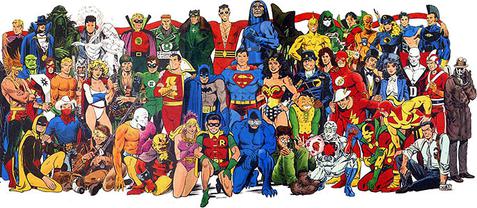
and love superheros!

And sci fi...
to name just a few... (otherwise we might be here all day!)

In my free time (what free time?) I dance...
And cosplay... :D
Rey cosplay

Stargate cosplay
Roy Harper from Arrow cosplay


Me in the STL comic con costume contest as Violet Parr from the Incredibles

I also love to read YA and MG!
My dog Sophie
And of course I'm a writer! I write MG and YA scifi and fantasy.
(don't act so surprised by the genres :-P)

And for Pitchwars I'll be subbing a MG fantasy about a girl... who can change into...
BUT... she doesn't want anything to do with being a dragon...

So I'll leave you there... for now...

But I will say, with each manuscript I've completed and queried, I've learned more and more about the process and improved each step of the way. I've gotten full requests that ultimately turned into no's and I just didn't quite connect enough's, so I really want to work with someone to make sure my manuscript is at that next level and has that "it" factor. I'm ready and willing to make my manuscript shine no matter what it takes.

All in all, I'm really looking forward to getting to know the Pitchwars mentors and participants, maybe swapping some chapters, hopefully really improving my manuscript, geeking out over books, and just saying hi. So hit me up on twitter and make sure you...
and that's me... in my tiny car...

Wednesday, July 3, 2013

Writing isn't Rocket Science... It's Much Much Harder

When I became an engineer and more specifically an aerospace engineer, I thought it would be one of the most difficult things I ever did in my life. I truly earned the pride and joy behind getting to say I'm a rocket scientist. Sure it's super cool to say that now and even more fun to joke about it, but it was a long, long road to get to that point where I could say hey I'm a rocket scientist and I'm smart dang it!

In college, I spent countless hours studying to only get a 32% on an exam which was in fact average. I learned to say D is for DONE in Thermodynamics when I'd never had less than a B as a final grade in a class and in fact I picked up a pair of C's to go with it that semester. I took eight to twelve hours to complete one homework problem, yes one single problem, and no, I'm not kidding! I even struggled to find a way to cope with learning disabilities that I'd only discovered in college. After all that, and countless other road blocks, long nights of studying, and second guessing my major and my life a million and one times, I'm here to say this does not even begin to compare to the journey I've been through as a writer.

In fact, I'm not even sure I should be comparing the two journeys, or if that's even comparing apples to apples. But having been through both, I can say with full honesty that rocket scientists have nothing on writers. This isn't discrediting any rocket scientists out there or even discrediting my day job. There's no doubt in my mind rocket scientists are smart people, geniuses in a lot of cases, that work their butts off. However, the journey as a writer not only tests your knowledge, your brain, and your ability to think and plan, but it also tests your will, your strength, and your emotions. And it's those last three things that separates writers from a lot of other professions. Because along the journey as a writer, you not only discover things about your characters, your settings, and the stories you construct, but you also are constantly discovering things about yourself - which is simultaneously the most wonderful and most frightening thing there is.

Everyday that I write, I see a thousand paths laid out before me and most of them aren't any better or worse than the next. But how do you choose? And how do you know if you are even on the right path? When do you step back and re-evaluate? I've got news for you, while these answers are never easy, they are a million times easier in engineering than they are in writing.

While engineering doesn't always have one right answer and sometimes doesn't have an answer at all, writing has an infinite number of answers. Writing is only limited by the writer's imagination not by the laws of physics. If you can dream it, it's possible. And as much as we engineers like to think that any dream is possible in the real world, physics unfortunately doesn't always cooperate. DARN YOU GRAVITY!

And even though rocket science isn't easy, it is possible. And although writing feels down right impossible at times as well, it too is possible. But it requires a lot of time and strength everyday to keep putting words one right after another on the page. It takes courage and swallowing down your emotions to keep going when your mind is telling you that you're insane and your heart is saying that it's completely broken. And yet we writers keep pushing through and keep going despite all the fences, hurdles, and walls put in front of us. We find new ways to bust down the obstacles.

So writers, give yourselves a pat on the back, what you do may not be rocket science but it also is by no means easy. And anyone that thinks so, is either kidding themselves, or hasn't given it an honest shot. So keep doing your thing writers. This rocket scientist and writer takes her hat off to you!